
InRange measures what each meal does to your glucose.
Your sensor already takes a reading every few minutes. InRange matches those readings to the meals you log — so after a few weeks every dish you eat carries its own numbers: how far it raises you, when it peaks, and when you are back in range.
Coming soon to the App Store.
Works with Apple Health, LibreLinkUp or Nightscout.
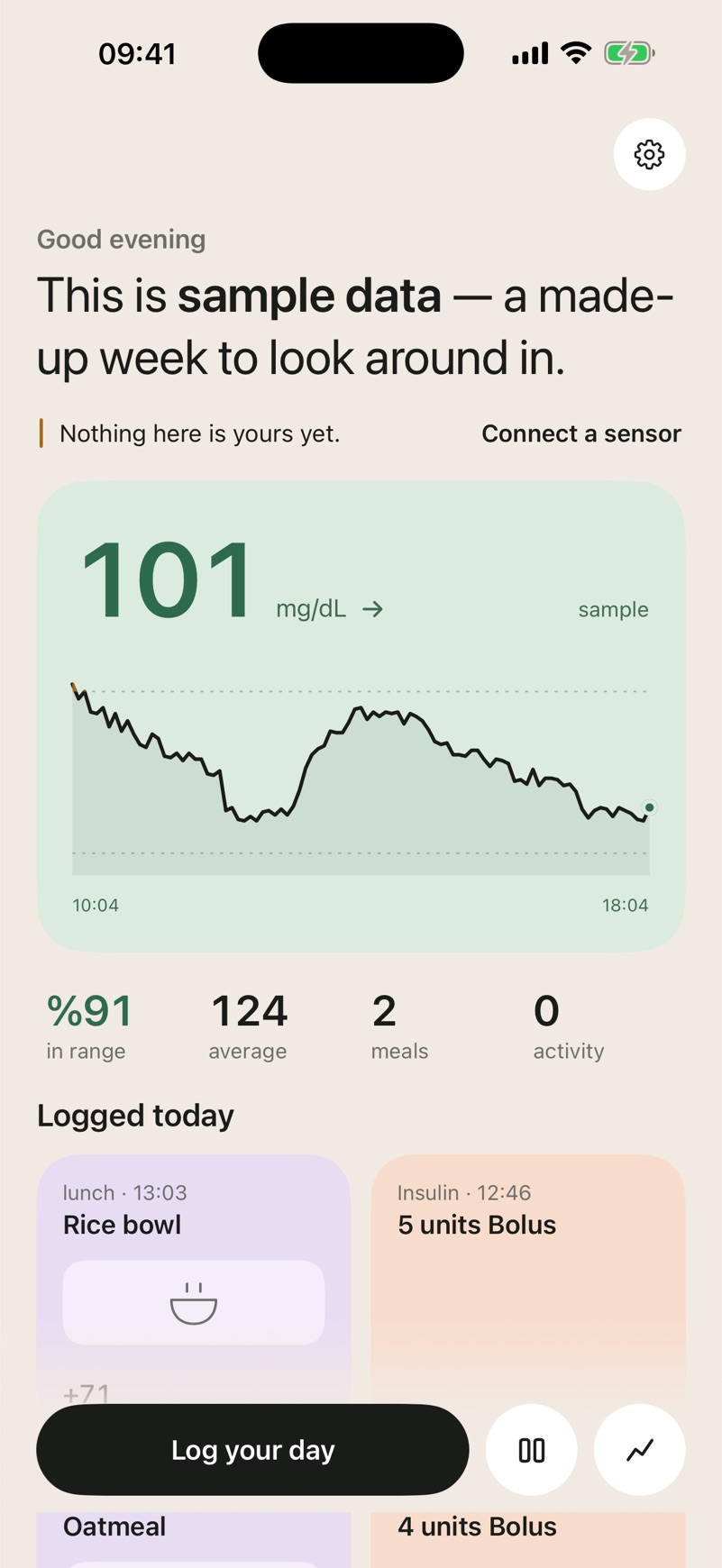
Three steps, and none of them is a guess.
The sensor measures
Nothing new goes on your arm. InRange reads the values your own sensor app has already recorded, from Apple Health, LibreLinkUp or Nightscout. Nothing else is needed.
You log the meal
Photograph it and the dish is named for you. Scan a packet's barcode and the nutrition it declares is read off the label. Or type it. A photograph is never used to estimate carbohydrate.
The dish answers back
Every entry is matched to the readings that followed it. Eat something often enough and it stops being a guess: it has an average rise, a peak time, and a time back in range.
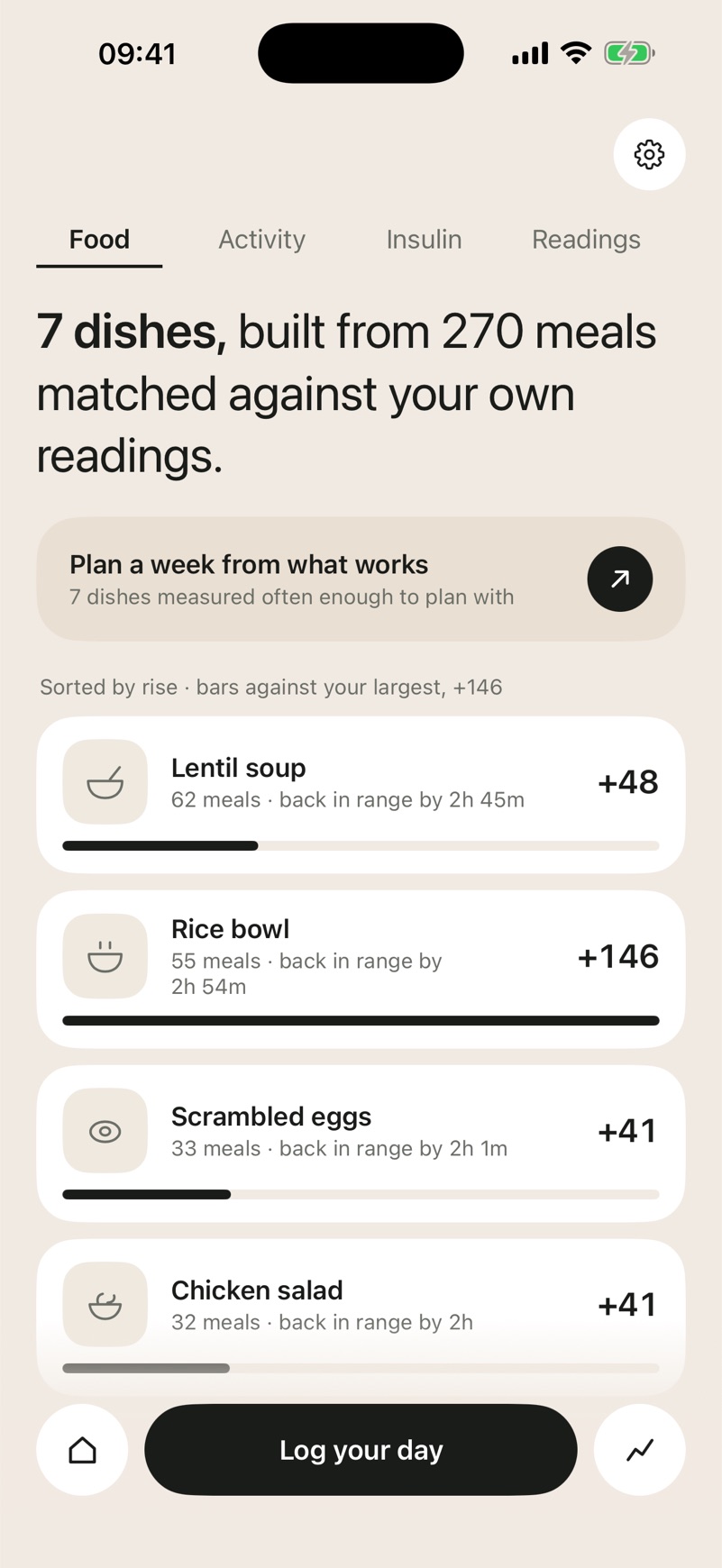
A library of your own dishes, not a database of everyone's.
This is lentil soup after 62 entries — every curve the app has recorded for it, laid over each other, with the average drawn through the middle.
Lentil soup after 62 entries — every curve recorded for it, with the average drawn through the middle.
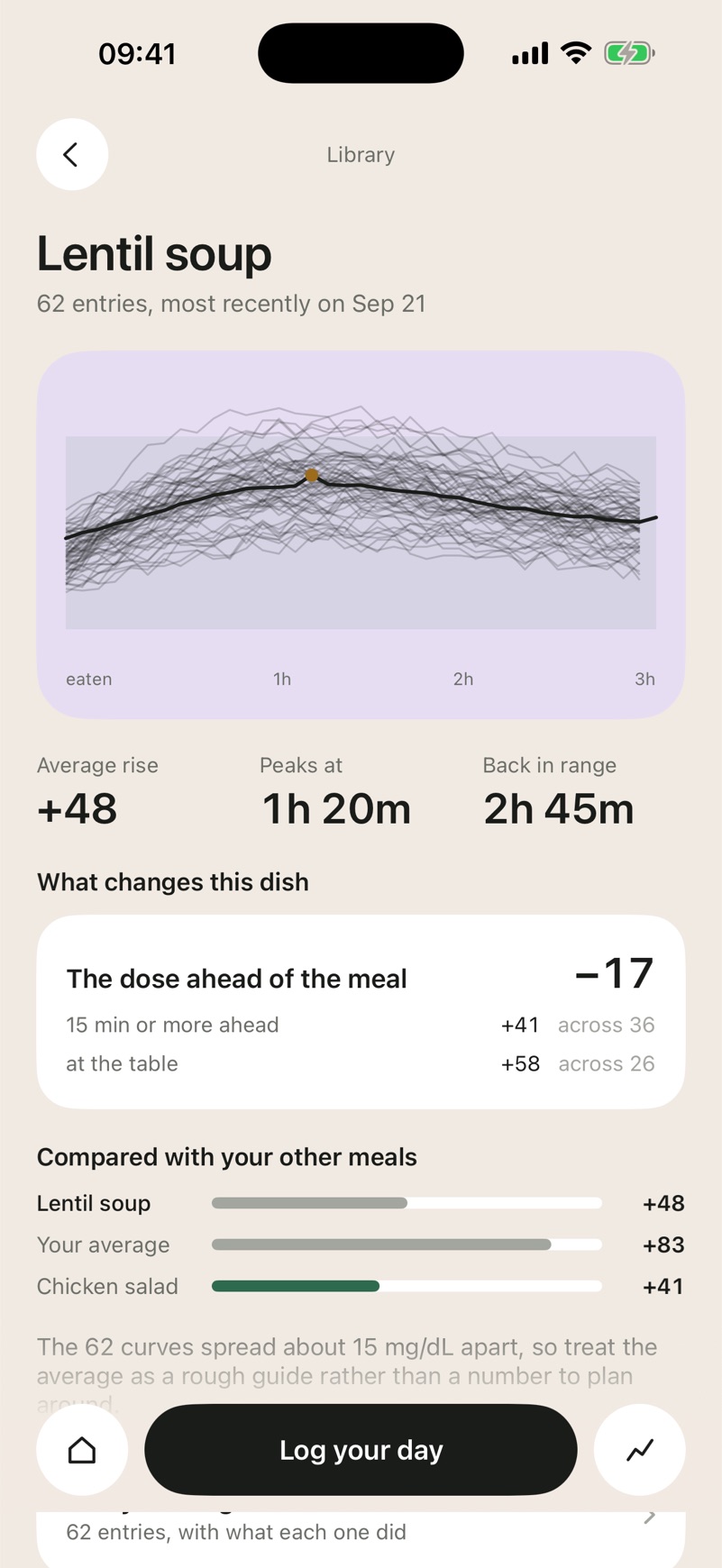
The app says it in the screen itself: theThe 62 curves spread about 15 mg/dL apart, so the average is a rough guide rather than a number to plan around.
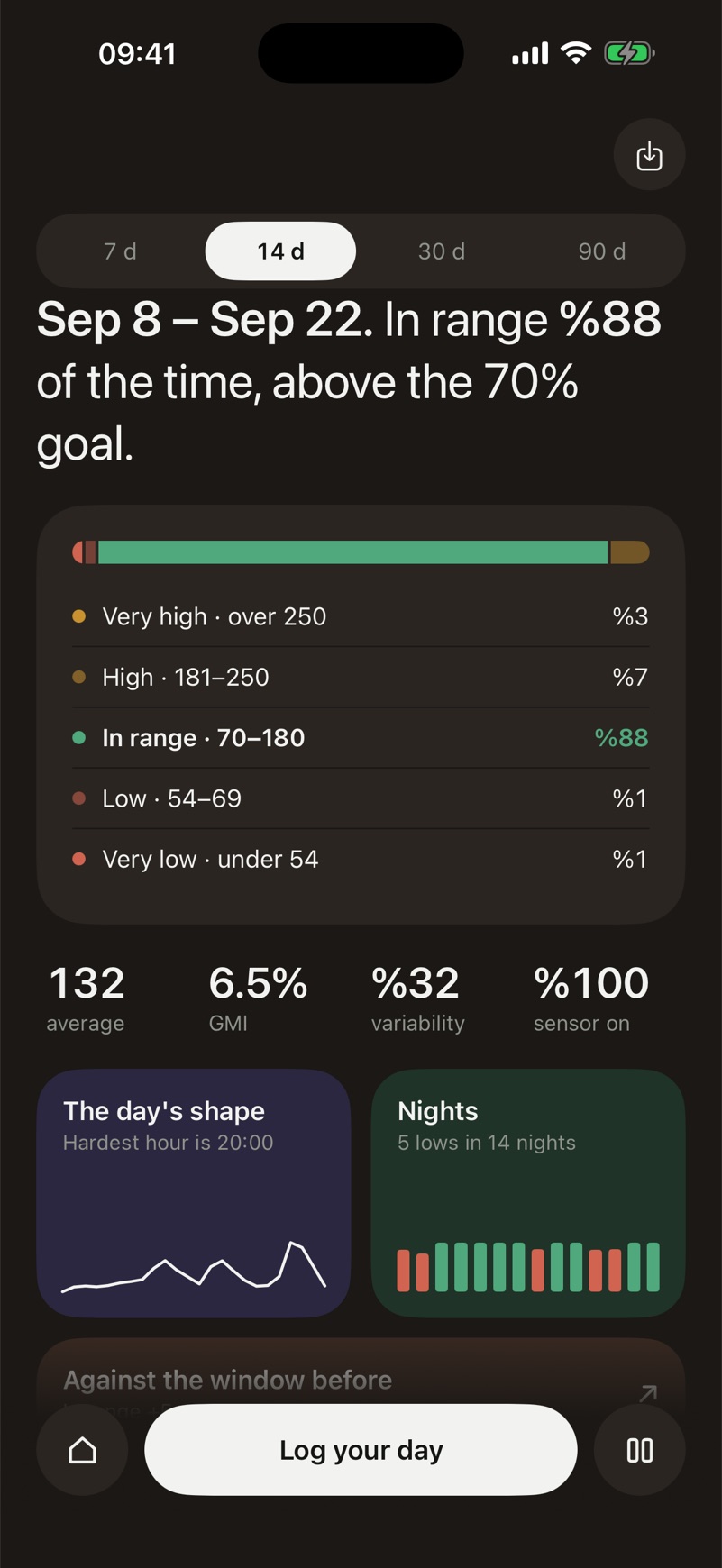
The report your appointment asks for.
Time in range over 7, 14, 30 or 90 days, with the figures a clinician reads first. The shape of the day is drawn from your own hours. Nights are read on their own, because they behave on their own.
Time in range over 7, 14, 30 or 90 days, the shape of the day, and nights read on their own.
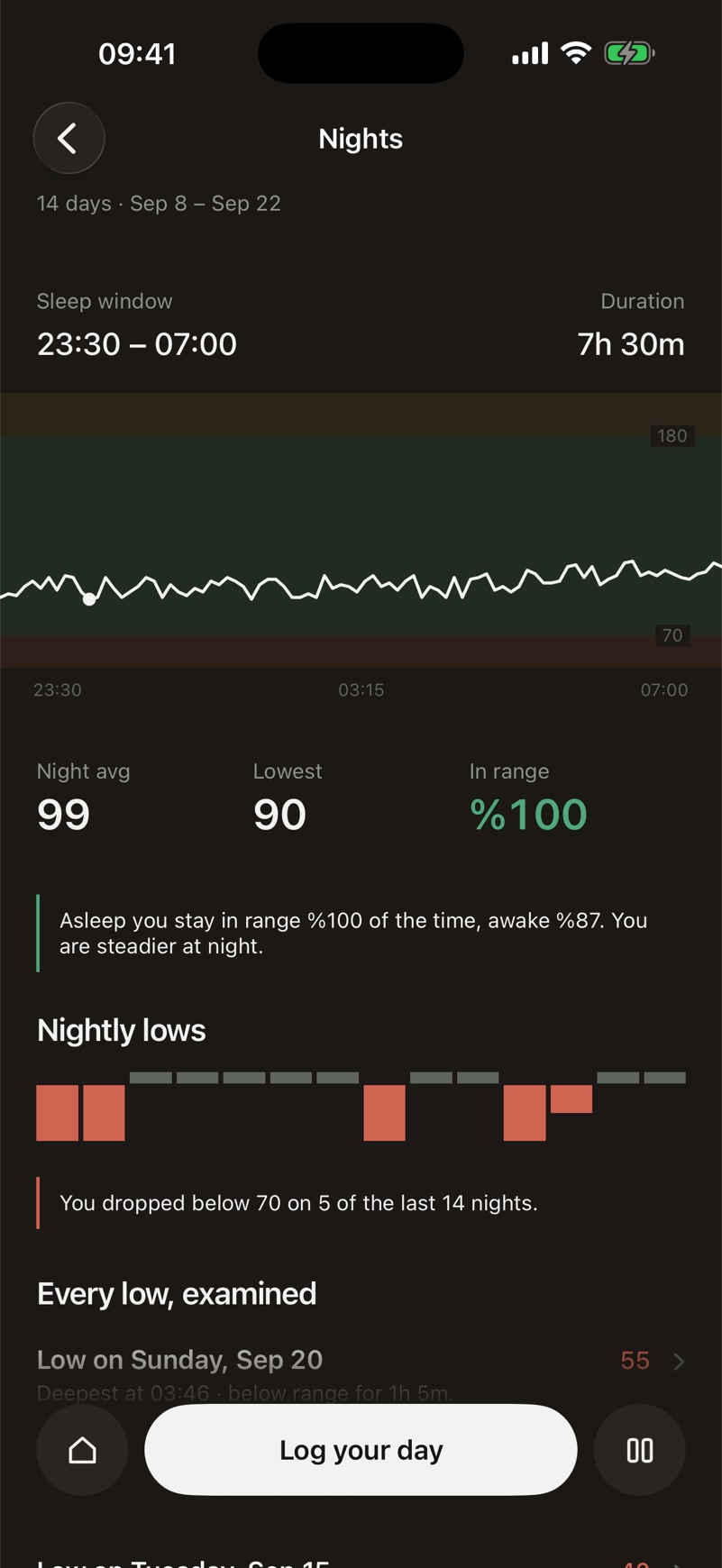
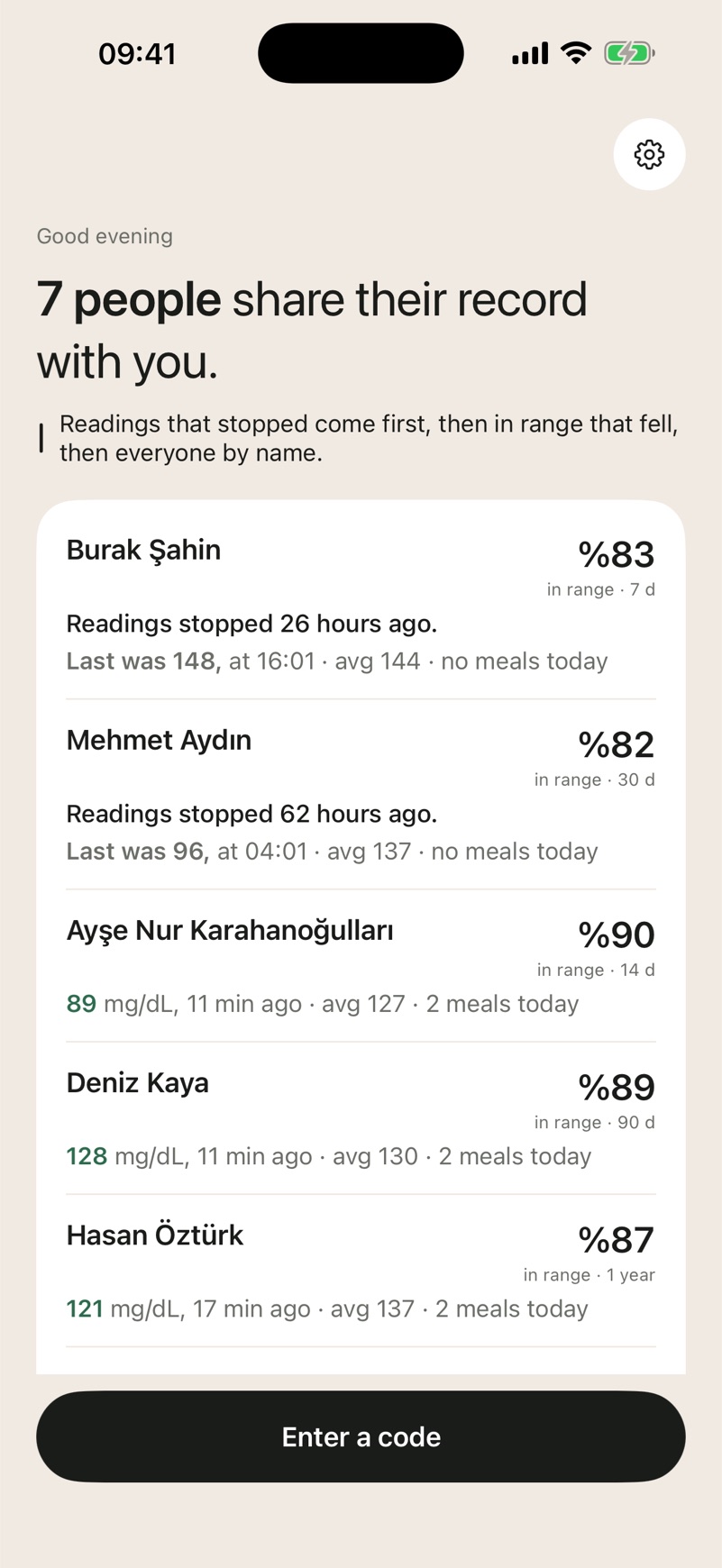
Let someone follow along with a code, and end it with a tap.
A partner, a parent or a dietitian can follow your record. The person wearing the sensor makes the code and chooses how far back it reaches. Either side can end the share at any time, and ending it removes the copy on the server.
Family
They see the window you opened — and nothing outside it, enforced on the server rather than in their app.
A dietitian
Everyone who shares with them, in one list: readings that stopped first, then in range that fell, then by name.
What it does not do is the part worth reading.
Four things InRange will never do. Not yet, not behind a switch, not in a later version.
It does not guess carbohydrate
A photograph gives the dish a name. Grams come only from a barcode's own label, or from you.
It does not recommend a dose
No calculator, no suggestion, no nudge. Insulin stays between you and your clinician.
It does not raise alarms
Your sensor's own app is engineered and regulated for that, and runs while InRange is asleep. Keep those alerts on.
It does not give advice
No score, no diet, no verdict. It shows what happened and stops talking.
InRange is not a medical device.
Your readings stay on your phone.
Nothing leaves the device unless you ask for something that needs it: a share you created, a backup you switched on, a dish you want named or a packet you scanned. Nothing is sold, profiled or advertised against.
Read the full privacy policy →Start with the week you have already lived. InRange begins with what your sensor has already recorded.
Coming soon to the App Store.
Works with Apple Health, LibreLinkUp or Nightscout. iPhone, with an Apple Watch glance, widgets and Live Activities.